Natural Supplements
Sea Buckthorn and Moringa: Why This Combination Works
06 Sept 2026 • Amisha Surana
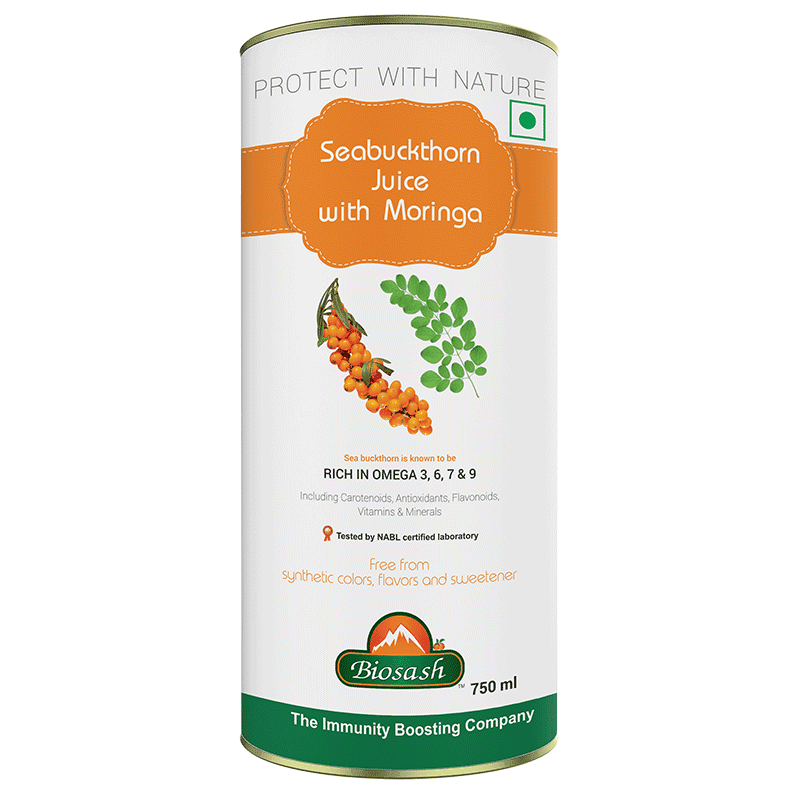
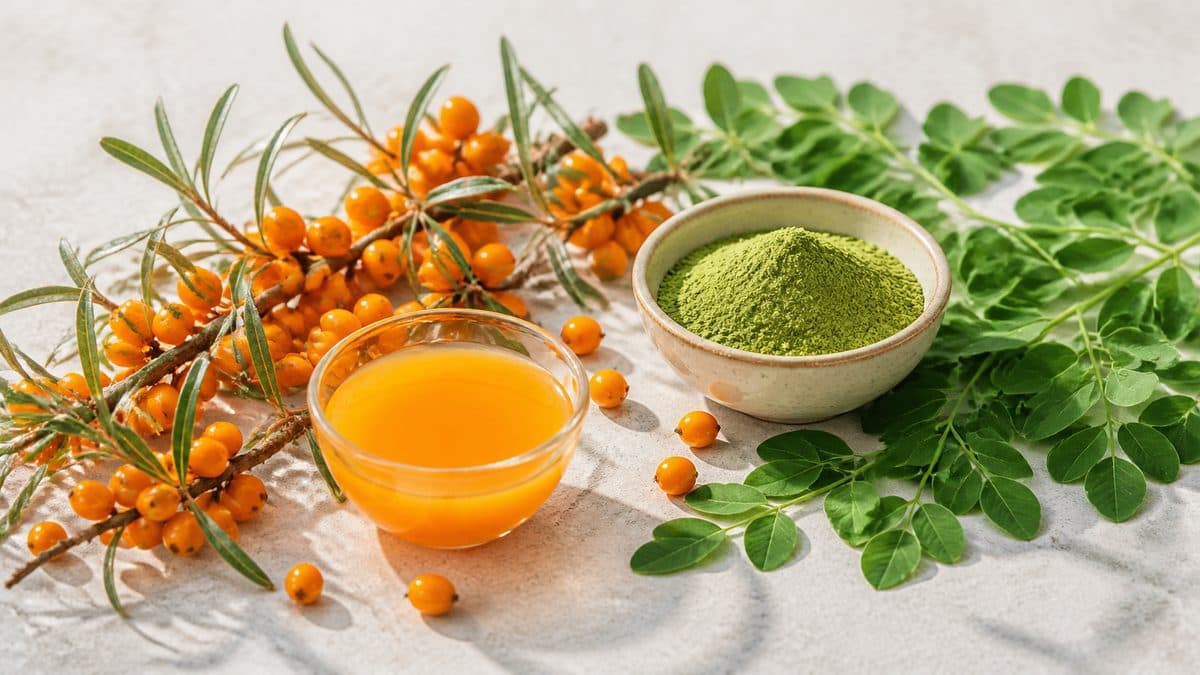
Sea buckthorn and moringa come from opposite ends of the plant world, and that is precisely why they pair well. One is a berry from cold, high-altitude Himalayan slopes. The other is the leaf of a tree that thrives in Indian heat and grows in backyards across the south. Fruit and leaf carry different nutrients, so putting them in one bottle widens the spread rather than doubling up.
A good combination is not two ingredients that do the same thing. It is two that fill each other's gaps, in nutrition and in taste. The same reasoning sits behind pairing the berry with turmeric.
A berry and a leaf, doing different jobs
Plants store different things in different parts of themselves. Fruit tends to carry sugars, acids, colour compounds and, in oil-bearing fruits like sea buckthorn, fatty acids. Leaves are the working machinery of a plant, so they concentrate minerals, chlorophyll and a different family of plant compounds altogether.
Combine a berry and a leaf and you get two nutritional profiles that barely overlap. That is a more interesting proposition than blending two berries, which would largely repeat each other.
What sea buckthorn brings
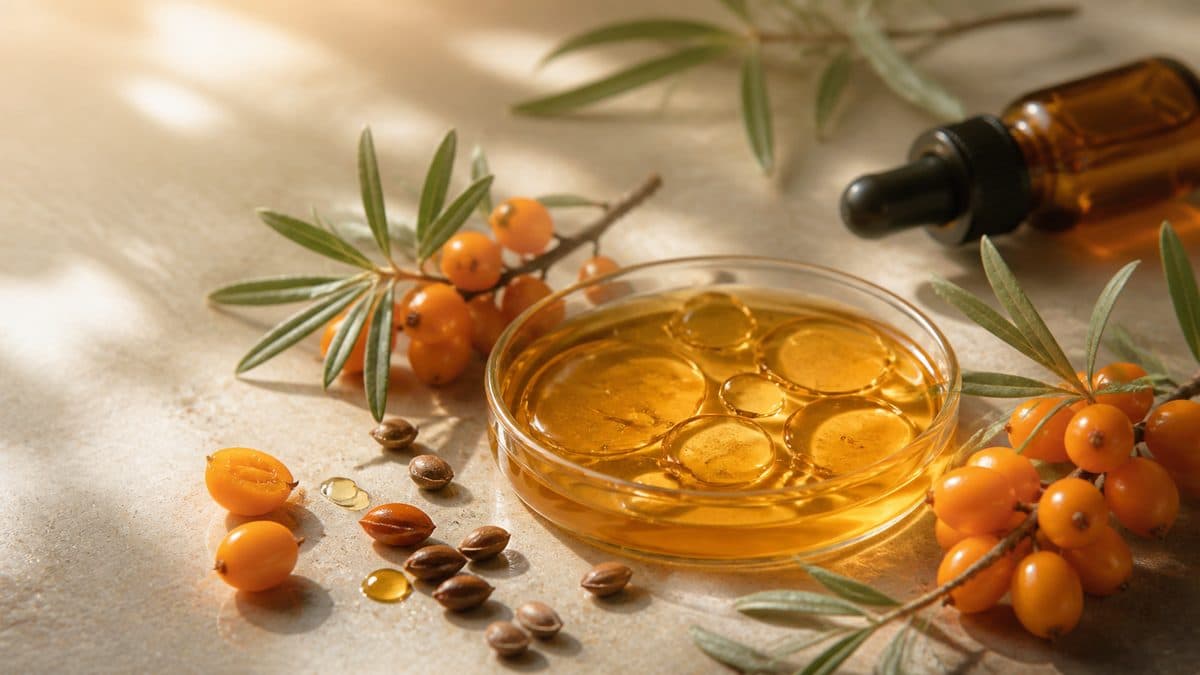
Sea buckthorn, Hippophae rhamnoides, is a small orange berry from cold high-altitude regions, grown in India mainly in Ladakh, Himachal Pradesh and Spiti, where much of it grows wild rather than on a farm. That is why labels so often carry the phrase wild-harvested. Its stand-out feature is the fatty acid profile: it is one of very few plants containing Omega 3, 6, 7 and 9 together, and it is notably rich in Omega-7, or palmitoleic acid, which is genuinely uncommon in plants. Omega-7 is a fatty acid the body uses in maintaining skin and mucous membranes.
Alongside that it is a good source of Vitamin C, and it carries Vitamin E, carotenoids including beta-carotene, and flavonoids. It is naturally low in sugar, and it is sharply tangy, which becomes relevant to the blend in a moment.
What moringa brings
Moringa is the drumstick tree, familiar to most Indian households long before it became a wellness word. The pods go into sambar, and the leaves have been cooked as a green and used in Ayurvedic practice for generations. In a juice it appears as the leaf rather than the pod.
The leaf contributes what leaves contribute: a mineral profile, chlorophyll, plant protein and its own set of plant compounds, along with vitamins found in dark green vegetables. It is one of the few greens that Indian kitchens have valued as much for nourishment as for the pot, which explains its long presence in traditional cooking and its recent presence on labels. If you are weighing the two ingredients separately rather than together, the side-by-side comparison is the other half of this question.
Why Sea Buckthorn and moringa work together
Three things happen when you put them together.
- Nutritional breadth. A fruit profile and a leaf profile in one glass covers more ground than either alone, without either ingredient needing to be dosed heavily.
- Balance of taste. Sea buckthorn is sour and bright. Moringa is grassy and faintly bitter. Sourness and bitterness pull in different directions, and the blend lands somewhere more rounded than either extreme.
- Everyday familiarity. Moringa is a food most Indian families already know and trust, which makes an unfamiliar Himalayan berry easier to welcome into a routine.
On the taste, honestly
This is not a sweet drink. Sea buckthorn is tart enough to make you blink, and moringa adds a green, vegetal note behind it. Diluted properly in a full glass of water it is perfectly pleasant, and most people stop noticing within a week. If you expect something like a packaged mango drink, you will be surprised. If you expect something closer to a fresh, sharp nimbu-style drink with a green edge, you will be about right. There is no added sugar in Biosash juices, and no artificial colours, flavours or sweeteners, so nothing is masking the ingredients.
How to take a Sea Buckthorn blend
The pattern is the same as with a single-ingredient juice: around 10 ml diluted in a glass of water, morning and evening, roughly twenty minutes before meals. Use cool or room-temperature water rather than hot. Keep the bottle refrigerated once opened and shake it gently before pouring, because natural settling is normal when nothing artificial is holding the liquid together.
As with everything in our nutritional juices range, consistency matters more than quantity. Take a modest glass daily for a few months rather than a large one for a fortnight.
What a combination is not
A two-ingredient juice is not a multivitamin, not a meal, and not a substitute for eating vegetables. Blending ingredients broadens what is in the glass, but the glass is still a small part of a day's nutrition. It belongs next to your food, not in place of it, which is how the nourishing range is meant to be used.
If you are pregnant, nursing, or taking regular prescription medication, check with your doctor before adding any new supplement to your routine.
The logic of this blend is simple enough. Take a berry with an unusual fatty acid profile and good Vitamin C, add a leaf with a mineral and plant-compound profile of its own, and you get a wider nutritional spread in one glass than either ingredient manages alone. The fact that the flavours balance each other is a useful bonus.