Energy Drinks
Sea Buckthorn Juice Shelf Life and Storage: Common Questions Answered
07 Sept 2026 • Riddhi Jain
Sea buckthorn juice keeps until the best-before date printed on the pack, provided the bottle stays sealed, cool and out of direct sunlight. Once you open it, the useful rule changes completely: refrigerate it, keep the cap tight, and finish it over weeks rather than letting it sit for months.
That is the short version. The longer version matters in Indian conditions, where a kitchen shelf in May behaves very differently from the same shelf in December, and where a bottle in a car boot can spend an afternoon somewhere no juice should ever be.
What the date on the bottle actually tells you
Every pack carries a manufacturing date and a best-before or use-by date. Read those first, because they are specific to that product and that batch, and they are more reliable than any general advice on a blog, ours included.
A best-before date assumes the bottle has been stored the way the label says and has not been opened. It is a statement about the sealed product. The moment you break the seal, air, spoons, water and kitchen temperatures enter the picture, and the printed date stops being the whole story.
Storing an unopened bottle of Sea Buckthorn juice
Cool, dry and dark is the entire instruction, and it is easier said than done in an Indian kitchen. Heat and light are what degrade a fruit juice fastest, and sea buckthorn's colour and delicate nutrients are not exempt, so where you put the bottle matters more than most people assume.
- Keep it away from the stove, the oven and the back of the fridge's warm compressor side
- Do not leave it on a windowsill or anywhere direct sunlight lands during the day
- Avoid storing it in a car, especially in summer, even for a few hours
- A cupboard or pantry shelf is fine, as long as it is not the one above the hob
- During long, hot summers, refrigerating unopened bottles does no harm at all
Looking after Sea Buckthorn juice once it is open
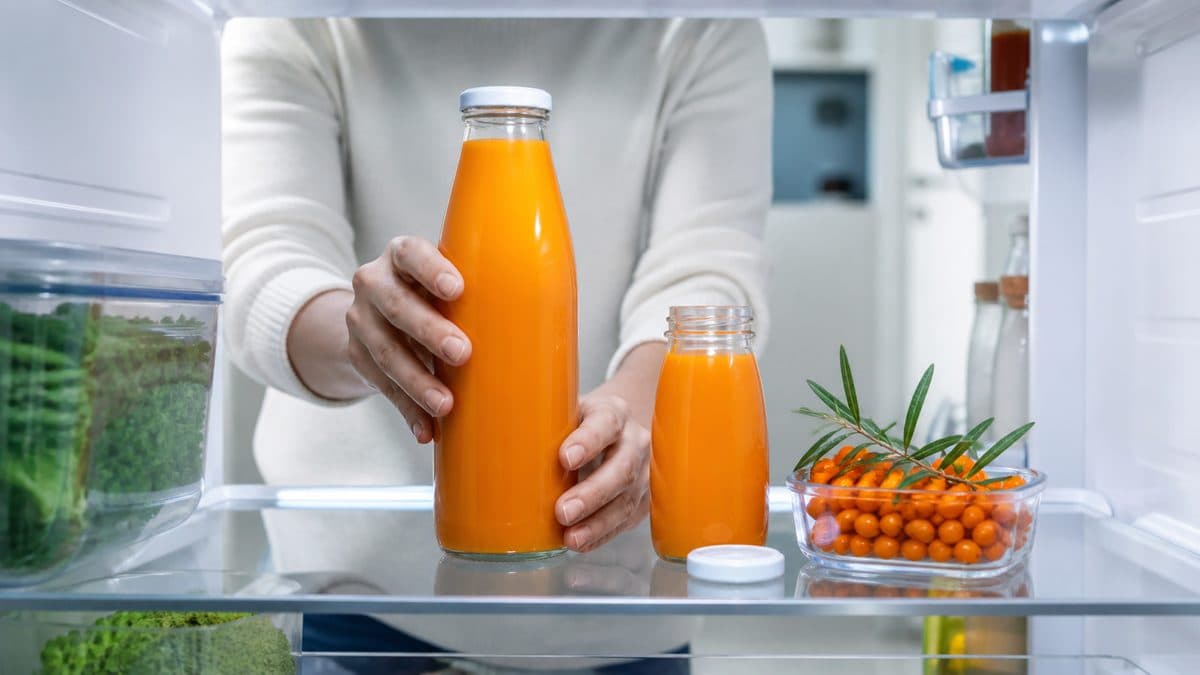
Refrigerate it, and treat the bottle as a food item rather than a shelf-stable product. Close the cap firmly each time so the juice is not sitting exposed to air between servings.
Never drink straight from the bottle. It puts saliva into a product you will be storing for weeks, and that is the most common way a good bottle goes off early in a shared household. Use the measuring cap, pour into a glass, add water, and rinse and dry the cap before putting it back. If plain water starts to feel monotonous, there are other simple ways to serve it that still keep everything out of the bottle. Biosash's stated usage of 10 ml morning and evening, mixed in water, roughly twenty minutes before meals, also happens to be the storage-friendly way to take it, since nothing else touches the inside of the bottle.
A quick reference for the situations that come up most often:
| Situation | Where to keep the bottle | What to watch for |
|---|---|---|
| Sealed bottle, everyday storage | A cool, dark cupboard away from the hob | Direct sunlight and warm shelves |
| Opened bottle | In the fridge, cap firmly closed | Long spells left standing on the counter |
| Peak summer | Refrigerated, even before opening | Bottles left in a car or on a windowsill |
| Monsoon months | In the fridge, handled with dry hands | Damp hands and a wet cap thread |
| Travelling or gifting | Upright, wrapped, out of the heat | A bag left in a hot room at the other end |
| Shared at home | One measuring cap, poured into a glass | Anyone drinking straight from the bottle |
Normal changes, and signs to stop
Perfectly normal
Sediment settling at the bottom is fruit. Sea buckthorn juice is not a clarified drink, so solids separating out is expected, and a shake before pouring puts them back where they belong. Slight variation in colour or thickness between batches is also normal for a natural product made from fruit picked in different seasons and locations. And the juice is meant to be sour. That tanginess is characteristic of the berry, not a sign that anything has turned, and it is worth understanding why the juice tastes the way it does.
Reasons to throw it out
Some changes are not normal, and there is no point being brave about them.
- A fizzing or bubbling sound when you open the cap
- A smell that is yeasty, alcoholic or noticeably off rather than fruity and sharp
- A cap or bottle that looks swollen
- Any visible mould around the neck or on the surface
- A bottle that was left out of the fridge, opened, for a long stretch in hot weather
When in doubt, discard it. A bottle of juice is not worth the gamble.
Travel, gifting and the monsoon
Sea buckthorn juice travels reasonably well when sealed, which is why it is a common gift from Ladakh and Himachal. Keep the bottle upright, wrap it so it does not knock about, and get it into a cool spot at the other end rather than leaving it in a bag in a hot room.
Humidity is the monsoon problem rather than heat. Damp cupboards encourage labels to peel and caps to be handled with wet hands, and both invite trouble. Dry your hands before opening the bottle, wipe the neck occasionally, and keep opened bottles in the fridge throughout the season.
Getting the most out of a bottle
Storage is really about consistency. The bottles that spoil are almost always the ones that were forgotten. Keep it at the front of a fridge shelf where you will see it, take it at a fixed point in your day, and measure rather than guess. Our full range and the specific storage instruction for each product sit on the nutritional juices pages, and the same products appear under browsing themes such as freshness.
Stored sensibly, a bottle of sea buckthorn juice gives you exactly what it should: a sharp, deep orange, low-sugar juice that tastes the way the berry does. Store it badly and you lose colour, flavour and the point of buying it in the first place.