
Energy Drinks
Sea Buckthorn Juice vs Noni Juice: An Honest Comparison
15 Sept 2026 • Amisha Surana
Sea buckthorn and noni get shelved together because both are strong-tasting fruit juices sold for daily wellness. That is roughly where the similarity ends. Sea buckthorn is a bright orange berry from cold, high-altitude Himalayan country, tangy and sharply sour. Noni is a pale tropical fruit from warm coastal regions, best known for a heavy smell and a bitter, fermented taste.
Neither is a medicine, and neither replaces a reasonable diet. So the useful question is not which one wins, but which suits your palate, your routine and what you are actually looking for nutritionally. If you are still working out what sea buckthorn juice is in the first place, start there and come back. Here is a comparison that does not flatter either of them.
Where Sea Buckthorn and noni grow
Sea buckthorn, Hippophae rhamnoides, is a cold-climate plant. It grows on thorny bushes in high, dry, harsh terrain, and in India that means largely Ladakh, Himachal Pradesh and Spiti. The fruit ripens in a short window and is picked by hand, which keeps supply limited and makes provenance easy to check when a brand is willing to state it. That short autumn harvest is also why the berry carries such a strong seasonal association and turns up so often in winter routines.
Noni, Morinda citrifolia, is the opposite kind of plant. It is tropical, thrives in warm coastal conditions, fruits generously and for much of the year, and grows across the Pacific islands, South East Asia and parts of coastal India. It is far easier to grow at volume, which is one reason noni juice reached global shelves earlier and in larger quantities.
How they taste, honestly
Sea buckthorn is sour. Properly sour, in the way a very tart citrus is, with a fruity orange note underneath. It is quite acidic, which is why it is taken diluted in water rather than drunk by the glass. People either enjoy the sharpness or get used to it within a week, and it works well diluted with a little water at room temperature.
Noni is a harder sell. The ripe fruit has a strong, cheesy smell that most people notice before they taste anything, and the flavour is bitter with a fermented edge. This is not a criticism, it is simply what the fruit is like. It also explains why so much commercial noni juice is blended with grape, berry or other fruit juices, and sometimes sweetened, to make it drinkable. If you buy noni, read the label carefully to see how much of the bottle is actually noni.
What each one brings nutritionally
Sea buckthorn's most distinctive feature is its fat profile. It is one of very few plant sources that contain Omega 3, 6, 7 and 9 together, and it is notably rich in Omega-7, palmitoleic acid, which is uncommon in plants. Omega-7 is a fatty acid the body uses in maintaining skin and mucous membranes. Alongside that, the berry is a good source of Vitamin C and contains Vitamin E, carotenoids including beta-carotene, and flavonoids. It is naturally low in sugar. On the Vitamin C side the more natural Indian comparison is not noni at all but amla.
Noni contributes plant compounds of its own along with some Vitamin C, and it has a long history of traditional use in Polynesian and South East Asian practice. What it does not offer is the fatty acid mix that makes sea buckthorn unusual. If Omega-7 is the reason you started reading about either juice, only one of them is a meaningful source.
Why noni is fermented and Sea Buckthorn is pressed
Traditional noni juice is fermented. The ripe fruit is left to break down over a period of weeks, and the liquid that separates is collected. Different producers ferment for different lengths of time, and modern commercial versions vary a great deal, from long-fermented to pressed-and-pasteurised to reconstituted from concentrate.
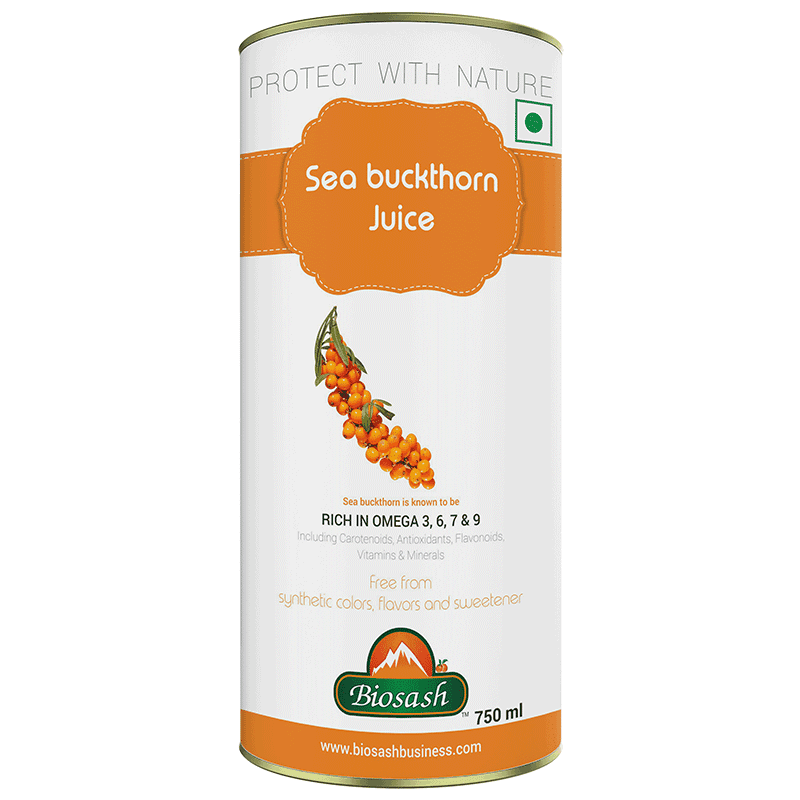
Sea buckthorn juice is not fermented. The fruit is sorted, washed, pulped and separated, then heat treated so it keeps safely, and bottled. Because the berry is naturally acidic and low in sugar, a good producer has no reason to add sugar or colour, and a Biosash bottle carries neither, along with no artificial flavours or sweeteners. The processing question you should ask about sea buckthorn is not how long it fermented but how much of the bottle is fruit.
Set out together, the two juices differ on almost every practical point.
| What you are comparing | Sea buckthorn | Noni |
|---|---|---|
| Where it grows | Cold, dry, high-altitude Himalayan country | Warm tropical and coastal regions |
| Harvest | Short season, picked by hand from thorny bushes | Fruits generously for much of the year |
| Taste | Sharply sour, with a fruity orange note underneath | Bitter, with a fermented edge |
| Smell | Mild and fruity | Strong and cheesy when ripe |
| Fatty acids | Omega 3, 6, 7 and 9 together, notably rich in Omega-7 | Not a meaningful source of that mix |
| How the juice is made | Sorted, pressed and heat treated, never fermented | Traditionally fermented over weeks |
| Sweetening | Naturally low in sugar, so a good producer has no reason to add any | Often blended with other fruit juice or sweetened to make it drinkable |
| Look for on the label | A named Himalayan sourcing region and stated fruit content | How much of the bottle is actually noni |
Which one suits you
Taste and routine decide this more often than nutrition does, because the juice you actually finish is the one that helps.
- You want an unusual fatty acid profile, particularly Omega-7: sea buckthorn
- You want a good plant source of Vitamin C in a low-sugar juice: sea buckthorn
- You cannot cope with sourness at all: noni is not sweeter, so consider neither, or try sea buckthorn well diluted first
- You want Himalayan sourcing you can trace: sea buckthorn, and check that the brand names the region
- You are drawn to a long fermented-juice tradition: noni
- You dislike strong smells: sea buckthorn is far easier to live with
Reading the label, whichever you choose
Both categories have the same weak spot, which is dilution hidden behind a confident front label. Check the actual fruit content, check whether sugar or another fruit concentrate has been added, and check whether the manufacturer says anything specific about where the fruit came from and how the finished juice is tested. Manufacturing standards and batch-level testing are the parts you cannot taste. Our own range sits under nutritional juices, and the same products are grouped by everyday themes such as immunity for easier browsing.
If you are choosing between the two, try a small bottle of one before committing to a large one of either. A juice you enjoy enough to take consistently is worth more than a better-sounding one you abandon in a fortnight. And if you have an existing health condition or take regular medication, run any new addition past your own doctor first.