Energy Drinks
How Sea Buckthorn Juice Is Made: From Himalayan Harvest to Bottle
03 Sept 2026 • Riddhi Jain
Sea buckthorn juice starts on a thorny bush in cold, high-altitude country and reaches you as a sealed bottle of sharp orange liquid. In between sit a hand harvest in a short ripening window, a fast trip down from altitude, sorting and washing, pulping, separation, heat treatment, testing and filling.
None of it is complicated in principle. All of it is difficult in practice, because the fruit is small, soft, awkward to pick and grown in places where the roads are long and the season is brief. That difficulty is the honest explanation for why this juice is priced the way it is.
The sea buckthorn harvest
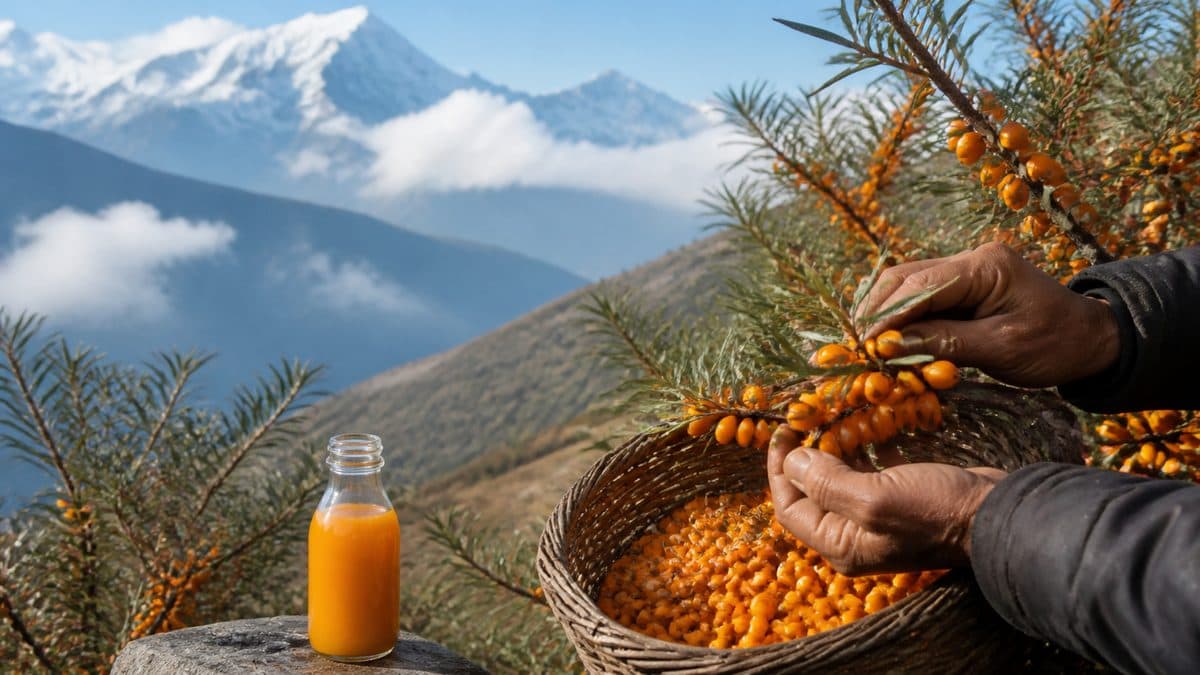
In India, sea buckthorn grows largely in Ladakh, Himachal Pradesh and Spiti, on slopes and riverbeds where winter is severe and the growing season is compressed into a few months. The berries ripen towards the end of summer and into autumn, and the window when they are at their best does not last long.
Picking is where the work is. The branches carry sharp thorns, the berries sit tightly packed along the stem, and the fruit is soft enough to burst between fingers. Harvesting is done by hand, slowly, by people who know the plant, which is the reality behind the phrase wild-harvested on a label. One common method takes advantage of the cold: branches are chilled or frozen so the firm berries can be shaken loose rather than pulled off one at a time. Either way, it is labour-intensive work that cannot be rushed or mechanised the way an orchard crop can.
Getting the fruit down from the mountains
Fresh sea buckthorn does not wait around. Once picked, the berries need to reach a processing facility quickly and in cool conditions, and the distances involved in Ladakh and Spiti are not small. Keeping the fruit cool in transit protects both the colour and the delicate nutrients that made anyone interested in the berry in the first place.
This stage is invisible on a label and it decides a great deal about the finished juice. Fruit that arrives warm and bruised produces a duller, flatter product no matter how good the factory is.
Sorting, washing and pulping
At the facility the fruit is graded and cleaned. Leaves, twigs, stones and any damaged or under-ripe berries are removed, and the rest is washed before it goes anywhere near a machine. It is unglamorous work and it is the difference between a clean-tasting juice and a muddy one.
Separating the parts of the Sea Buckthorn berry
The clean fruit is pulped, and the pulp is then separated from the seeds and skin. Sea buckthorn is unusual in that different parts of the berry are useful for different things, so this separation is not just waste removal. The juice and pulp go one way, and the seed goes another, which is where sea buckthorn seed oil comes from. It is a fruit with very little left over.
Turning pulp into a juice you can drink
The juice that comes off the pulp is intense, thick and extremely sour. Preparing it for the bottle means standardising it so every batch behaves the same way in your glass, and then heat treating it so it stays safe on a shelf without needing to be frozen.
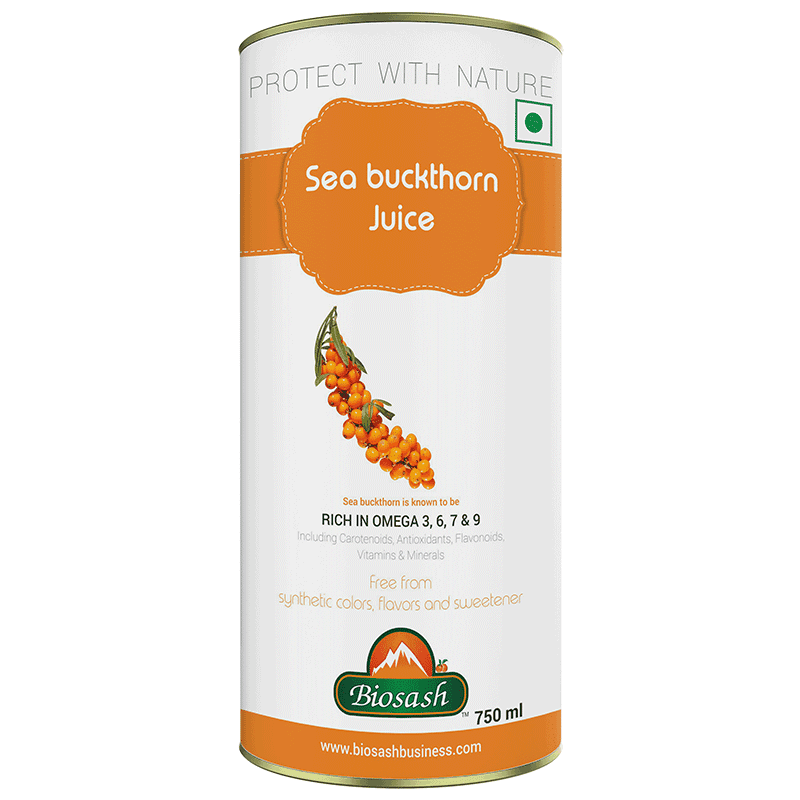
Two decisions matter enormously here, and they are the ones brands differ on. The first is how much of the bottle is actually fruit, since it is easy to stretch a strong juice a long way with water and apple or grape concentrate. The second is whether to sweeten. Sea buckthorn is naturally low in sugar and genuinely acidic, so sugar is the fastest way to make it easy to sell. Biosash juices are made without added sugar and without artificial colours, flavours or sweeteners, which means the sourness on your tongue is the berry's own.
Testing and bottling
Manufacturing happens under WHO-GMP certified manufacturing, which is a way of saying the facility runs to a documented standard with records, hygiene controls and audits behind it rather than on habit. Each production batch is tested at a NABL-accredited laboratory, so quality is checked batch by batch rather than certified once and assumed forever.
Filling and sealing follow, along with the batch number and dates that let a specific bottle be traced back to a specific run. That traceability is the part most people never use and every good producer needs, because it is what makes a problem findable if one ever occurs. You can see the finished range on our nutritional juices page, with the same products grouped by everyday themes such as nourishing.
Why Sea Buckthorn juice looks and tastes as it does
A few characteristics confuse people who are used to packaged fruit juice, and all of them trace directly back to the process above.
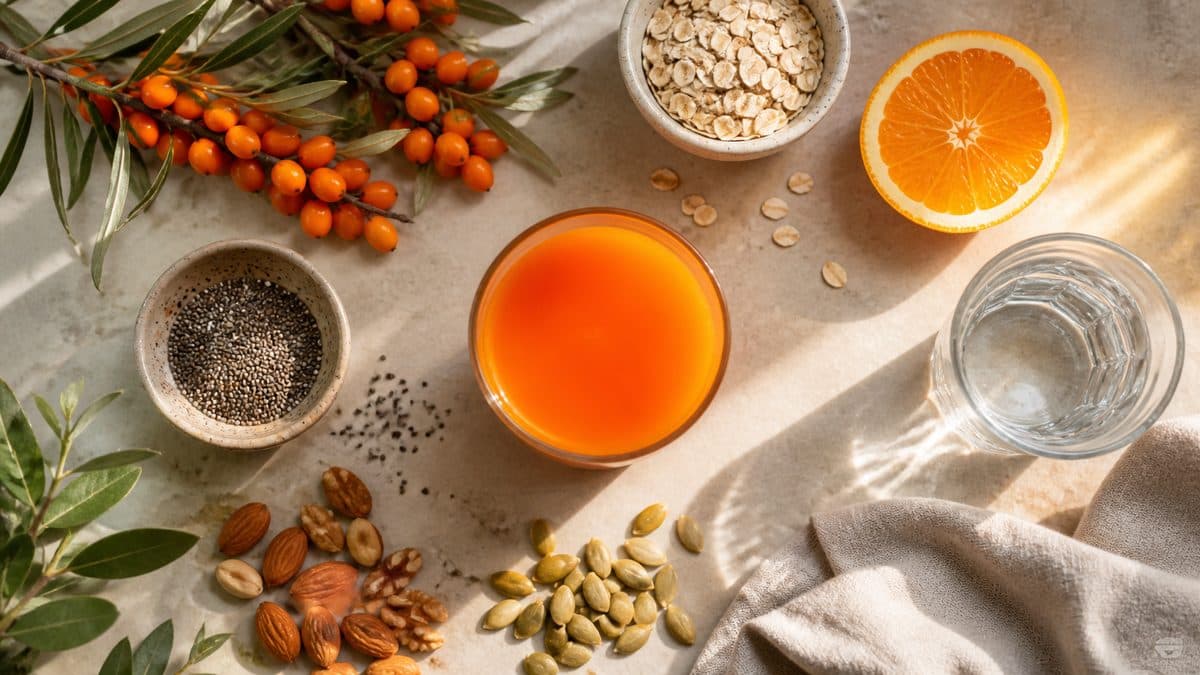
- Deep orange colour: carotenoids from the berry, which is why a pale juice suggests a diluted one
- Sediment at the bottom: fruit solids settling, since the juice is not heavily clarified. Shake before pouring
- Sharp sourness: the fruit's natural acids, left in because nothing was added to mask them
- Small serving size: Biosash's stated usage is 10 ml morning and evening, mixed in water, about twenty minutes before meals
- Batch-to-batch variation: fruit picked in different seasons and valleys is not identical, and a natural product will show that
Knowing how the juice is made changes what you look for when buying one. Ask where the fruit came from, how much of the bottle is actually that fruit, whether anything was added to soften the taste, and what testing sits behind the batch in your hand. Those four questions tell you more than any front label, whether you are comparing two sea buckthorn juices or weighing one against something made quite differently, such as aloe vera.