Health and Wellness
Where Does Sea Buckthorn Grow in India?
08 Sept 2026 • Riddhi Jain
Sea buckthorn grows in India along the cold, high-altitude Himalayan belt. In practice that means Ladakh above all, followed by Himachal Pradesh — particularly Spiti and Lahaul — with smaller populations in Uttarakhand, Sikkim and parts of Arunachal Pradesh. It does not grow in the plains, and it cannot be made to.
If you have only seen the bottle, that geography is worth knowing, because it explains almost everything about the price, the season and the supply.
Ladakh
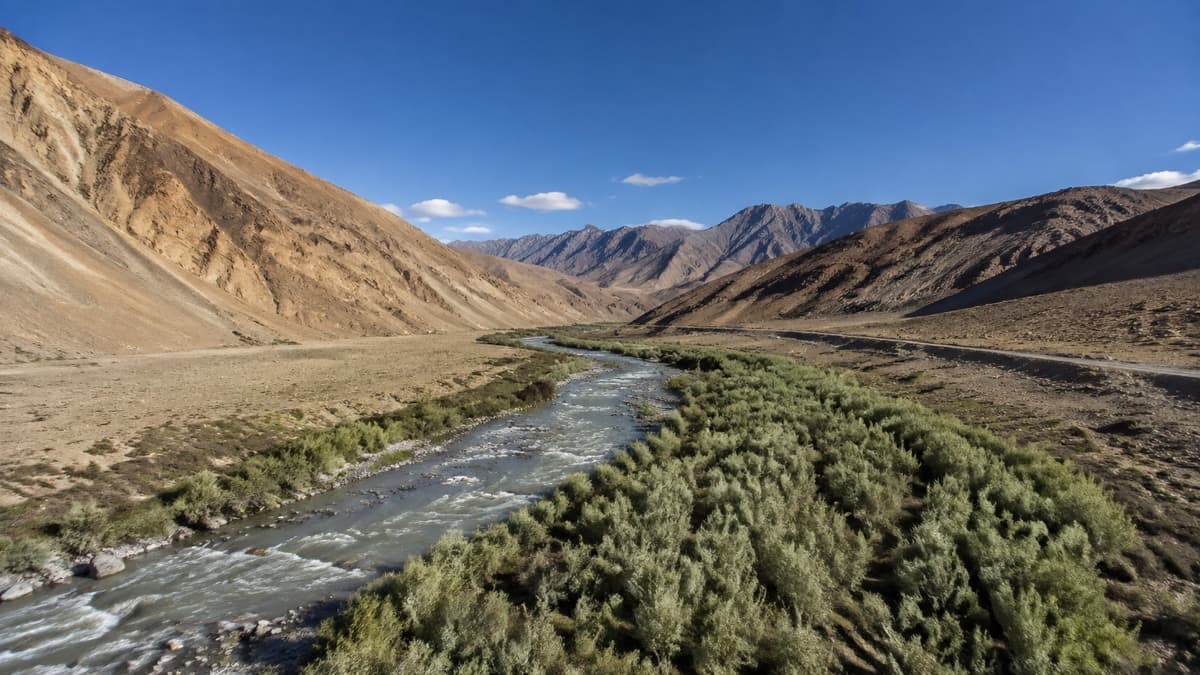
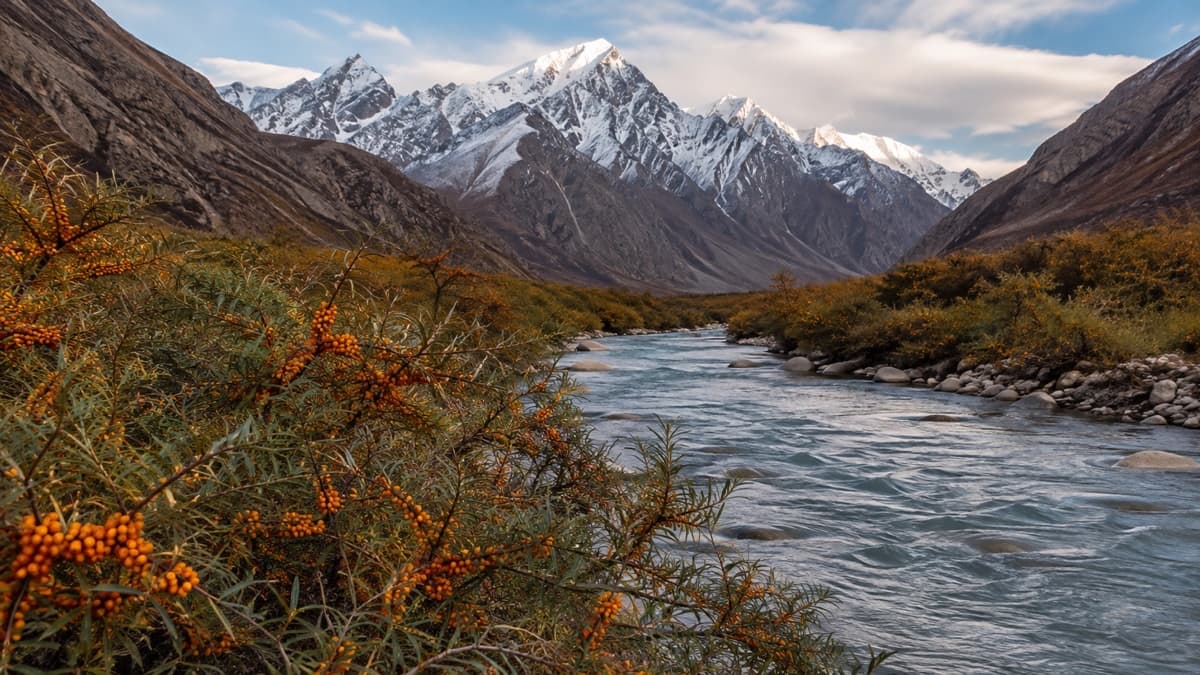
Ladakh holds India's largest and most significant sea buckthorn belt. The plant runs in dense bands along the Indus and its tributaries, and Nubra Valley is generally regarded as the biggest producing area within it.
What makes Ladakh suited to it is a combination most places cannot offer: altitude above 10,000 feet, a cold desert climate swinging between roughly minus forty and plus forty degrees, intense ultraviolet light, mineral-rich glacial soil and very little industry or pollution.
Sea buckthorn is also one of the few plants that will hold that landscape together. It fixes nitrogen, stabilises riverbanks and survives where almost nothing else establishes, which is why it has been used in Ladakh for erosion control as well as for food.
Himachal Pradesh
Spiti and Lahaul carry the next most substantial populations. The conditions are similar in kind if not in scale — high, cold, dry valleys where the plant grows along water courses. Local use there has a long history too, with the fruit taken as juice and the leaves used as tea.
Uttarakhand, Sikkim and the eastern Himalaya
Smaller populations occur in the higher reaches of Uttarakhand and in Sikkim and Arunachal Pradesh. These are far less significant commercially, and most sea buckthorn sold in India does not come from them.
Why it will not grow anywhere else
People occasionally ask whether sea buckthorn could be farmed in the plains, and the answer is essentially no — not in any way that produces the fruit people want.
The plant needs a cold dormancy period it will not get in a warm climate. It needs strong sunlight and low humidity. And the stress of altitude is not incidental to the fruit's composition; it is part of the reason the berry is dense in oils and antioxidants in the first place. Grow it easy and you change what it is.
The season is short
Sea buckthorn fruits once a year. The harvest window in Ladakh falls in autumn and is measured in weeks, not months.
Everything sold through the rest of the year comes from that window. There is no second crop and no way to extend it. When you see a brand talking about batches rather than implying limitless stock, that is the harvest calendar showing through.
Harvesting is still done by hand
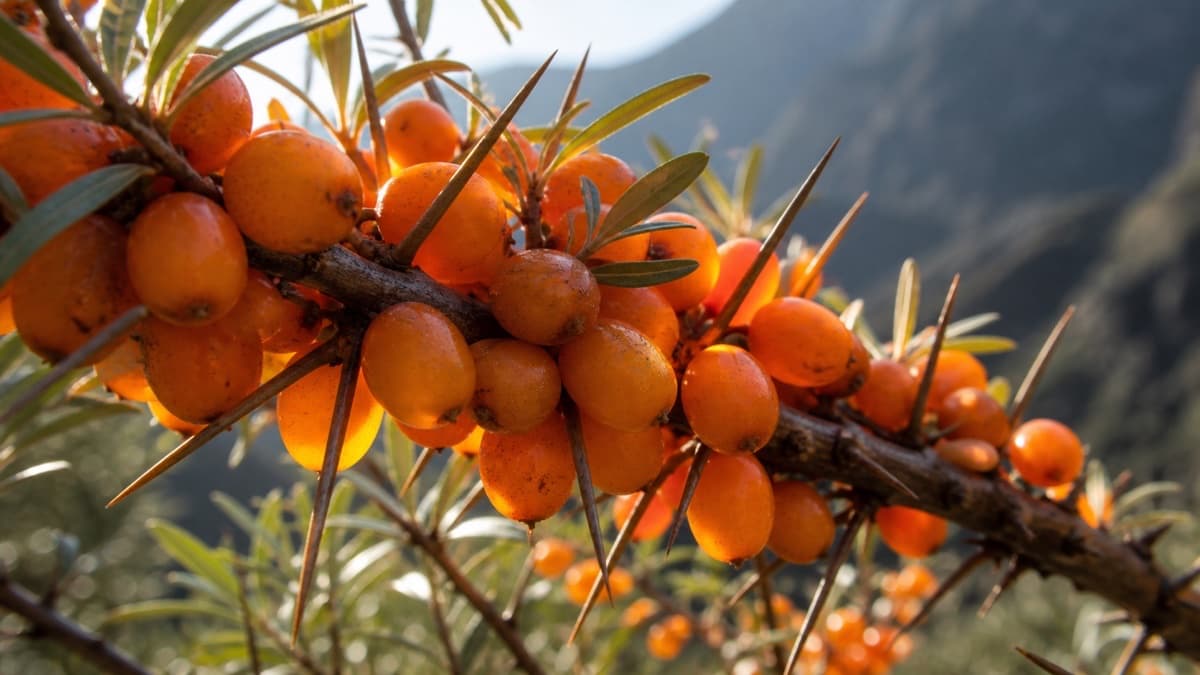
The branches are thorny and the berries sit tight against the wood, so picking is slow and physical, done on steep ground at altitude. Mechanised harvesting has not solved this at Himalayan scale.
This is the single biggest reason genuine sea buckthorn costs what it does, and it is worth remembering when a bottle is priced as though the fruit were easy to get. There is more on what the price is actually paying for if you want the arithmetic.
A national research centre has been proposed
In August 2026 the Union Ministry of Agriculture and Farmers Welfare, through the Indian Council of Agricultural Research, constituted a high-level committee to examine a proposed National Sanjeevani Research Centre for sea buckthorn in Nubra Valley. Its remit covers research, scientific cultivation, value addition, processing and commercialisation.
If it proceeds, the practical effect would be better agronomy and better processing knowledge for a crop that has so far been shaped more by tradition than by research.
Why any of this matters to a buyer
Knowing where the plant grows gives you a way to test a claim. A brand sourcing genuinely can name a region. It can tell you which season a batch came from. It can explain why supply is finite.
Our own fruit comes from Ladakh, and has done for three decades. You can read more about the berry and its composition, or look at the certifications behind it.