Health and Wellness
Why Ladakh Is India's Sea Buckthorn Hub
08 Sept 2026 • Riddhi Jain
Ladakh is where sea buckthorn grows best in India, and the reason is geography rather than agriculture. The plant needs cold, altitude, thin air and poor soil, and Ladakh has all four in a measure almost nowhere else in the country can match. What looks like barren land from a car window is, along the river valleys, the largest natural sea buckthorn belt India has.
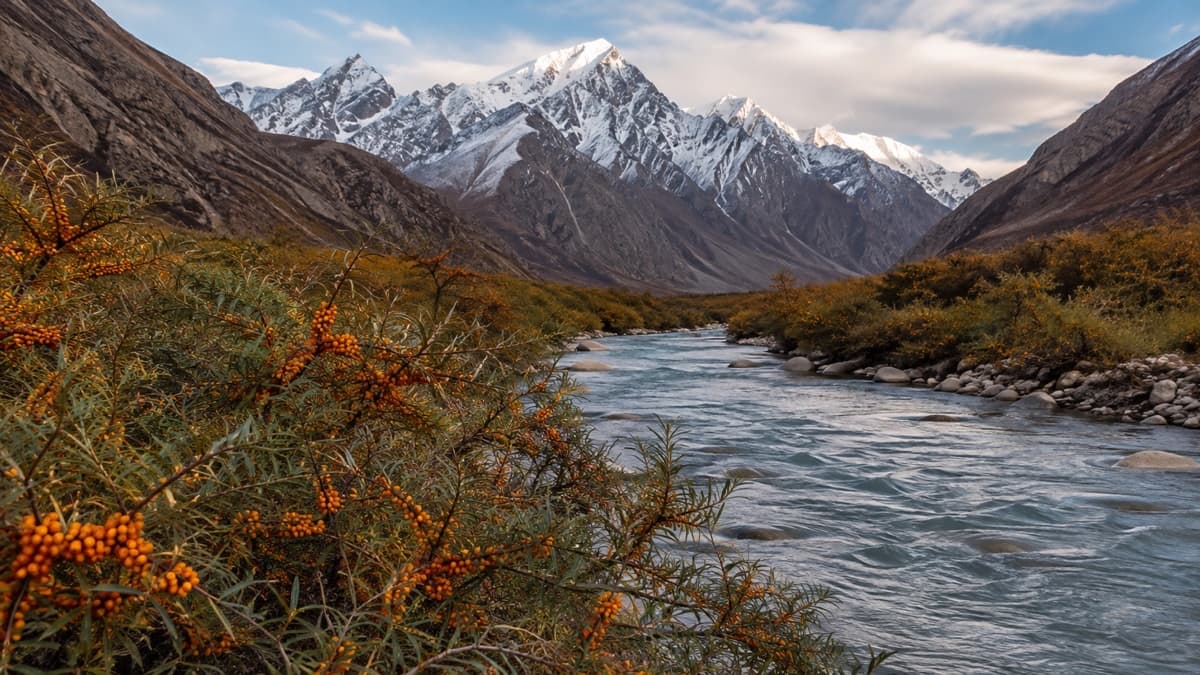
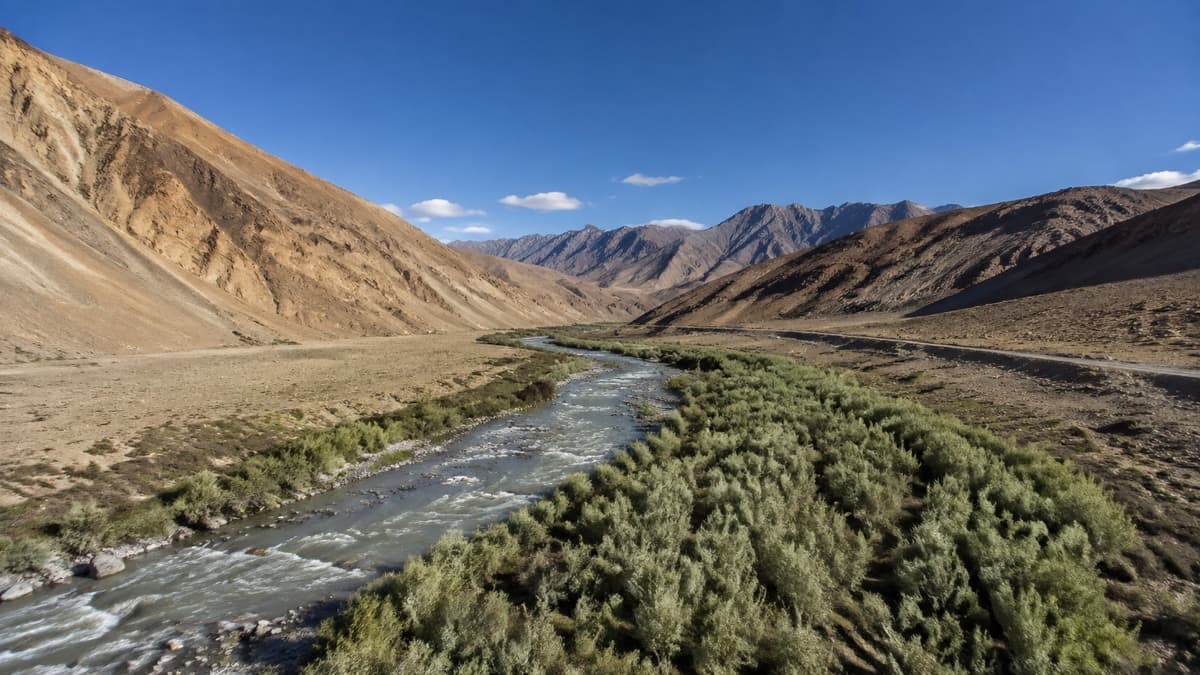
Drive from Leh towards Nubra and the pattern becomes obvious. The mountains are bare. Then the road drops towards a river, and a band of dense, silver-green scrub appears along the water. That scrub is sea buckthorn, and it is often the only thing growing for miles.
The conditions that make Ladakh different
Sea buckthorn is a survivor rather than a crop in the ordinary sense. It holds on where most plants fail, and the stress it lives under is part of what ends up inside the fruit.
Altitude
The plant is found across Ladakh at roughly 10,000 feet and above. At that height the air is thin, ultraviolet light is intense, and the growing season is short. Plants respond to that kind of pressure by producing more of the protective compounds that interest nutritionists — the same antioxidants and oils that make the berry worth harvesting.
Cold
Ladakh swings from around minus forty degrees in deep winter to plus forty in high summer. Very little survives that range. Sea buckthorn does, partly because it sends roots far deeper than its size suggests, drawing on minerals well below the surface.
Clean air and water
Ladakh has almost no heavy industry and a small population spread over a very large area. The plant grows along glacier-fed rivers in some of the cleanest air in the country. For a fruit that is pressed whole rather than peeled, that matters.
Where it actually grows
Sea buckthorn is spread across Ladakh's river valleys, and Nubra Valley is generally regarded as the largest producing area. The Indus and its tributaries carry these belts through much of the region, which is why the plant is so closely tied to Ladakhi life — used locally as food, as juice, and as a traditional remedy long before anyone bottled it commercially.
Estimates of the total area under sea buckthorn in Ladakh vary between agencies, and it is worth being honest that no single figure is settled. What is not disputed is that Ladakh holds the country's most significant concentration of it.
Why the harvest stays small
The plant is generous. Getting the fruit off it is not.
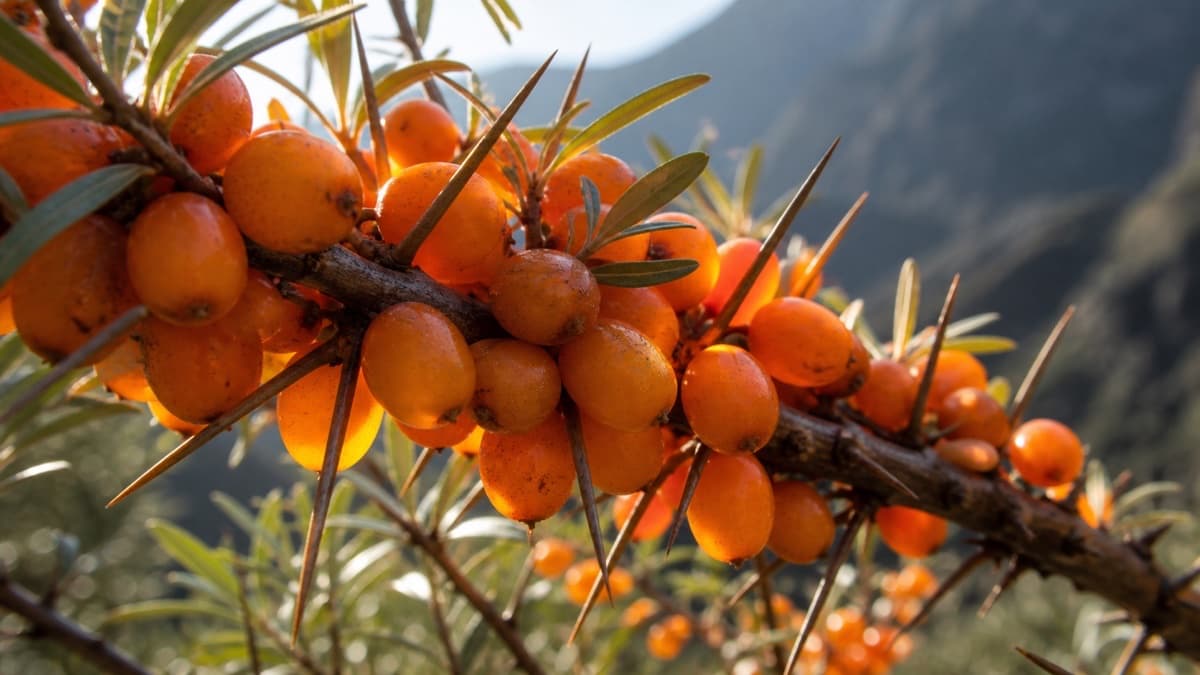
Sea buckthorn branches are covered in long, hard thorns, and the berries sit tight against the wood. There is no mechanised harvest that works well at this scale in this terrain. Almost all of it is picked by hand, in a short autumn window, by people working on steep ground at altitude.
That single fact shapes everything downstream. It is why genuine sea buckthorn is expensive, why supply is seasonal rather than continuous, and why the price on a bottle tells you something real about what is inside it.
What this means when you are buying
India's sea buckthorn harvest is limited by nature and by labour. When a market suddenly fills with brands, that supply does not expand to match. So the question worth asking a brand is not whether its juice is "pure" — every label says that — but where the fruit came from and in which season.
A brand that can name its region is describing a real supply chain. One that offers only the words "natural" and "premium" is describing a design brief. That is the first of the checks worth running before you buy.
Ladakh is now being treated as a national asset
In August 2026 the Union Ministry of Agriculture and Farmers Welfare constituted a high-level committee, through the Indian Council of Agricultural Research, to examine a proposed National Sanjeevani Research Centre for sea buckthorn in Nubra Valley. The committee's brief covers research, scientific cultivation, value addition, processing and commercialisation.
Whatever comes of it, the signal is clear enough: the crop that has grown quietly along Ladakh's rivers for centuries is now being looked at as a national one.
Our own connection to it
Biosash has worked with Ladakhi sea buckthorn for three decades, with organic certification in place since 1993. Our fruit is sourced from Ladakh, processed under WHO-GMP certified manufacturing and batch tested at a NABL-accredited laboratory. You can see the certifications for yourself, and read more about the berry itself if this is your first time reading about it.
Ladakh is not a marketing story for us. It is where the fruit comes from.