Energy Drinks
Best Sea Buckthorn Juice in India: How to Choose a Genuine Brand
07 Sept 2026 • Riddhi Jain
There is no single best sea buckthorn juice in India, but there is a reliable way to tell a genuine one from a diluted one. Check where the fruit comes from, how high sea buckthorn sits in the ingredient list, whether sugar or sweeteners have been added, and what the brand can tell you about manufacturing and testing. Four checks, and most of the market sorts itself out.
The reason this matters is simple economics. Sea buckthorn is grown at high altitude, harvested by hand from thorny branches, and expensive to bring down from the mountains. Anything that undercuts that reality dramatically has usually been thinned with water, cheaper juice or sugar, which is really a question of what the figure on the bottle is paying for.
Where Sea Buckthorn sits on the ingredient list
Front-of-pack design is marketing. The ingredient list is the product. Turn the bottle around and look for sea buckthorn near the top rather than trailing behind water and apple or grape juice concentrate.
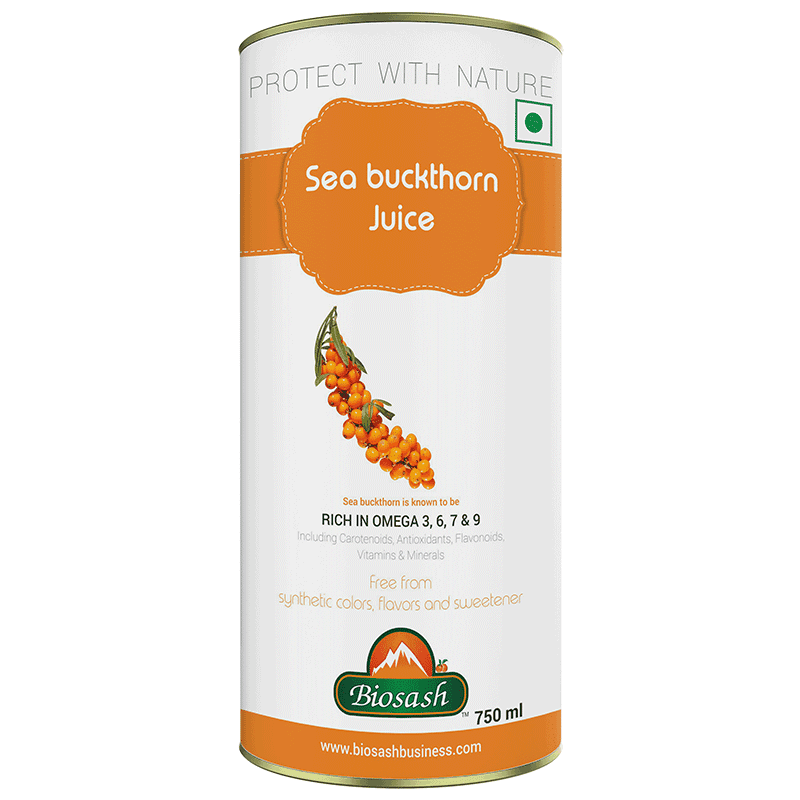
Then look for what should not be there. Added sugar, artificial sweeteners, artificial colours and artificial flavours all change what you are buying. Biosash juices are made without added sugar and without artificial colours, flavours or sweeteners, and any brand worth considering should be able to say the same plainly on the pack.
Ask where the Sea Buckthorn was grown
In India, sea buckthorn grows in cold, high-altitude regions, largely Ladakh, Himachal Pradesh and Spiti. A brand that can name its sourcing region is telling you something specific. A brand that says only "natural" and "pure" on a nicely designed label is telling you nothing at all.
Sourcing also affects supply honesty. The harvest is seasonal and limited, which is why credible brands talk about batches rather than implying an endless river of juice. Our own approach across the nutritional juices range is built on Himalayan sourcing for exactly this reason.
Look for manufacturing and testing detail
How it is made
WHO-GMP certified manufacturing is a meaningful signal, because it describes documented processes and controls rather than a general promise of quality. Biosash products are manufactured under WHO-GMP certification.
How it is checked
Testing is the other half. Batch testing at a NABL-accredited laboratory means an independent, accredited lab has examined that batch, not that a marketing team is confident about the category in general. Ask whether testing is done per batch, because that is the difference between a one-time certificate and an ongoing practice.
What you can actually verify
Look for a batch number, a manufacturing date, an expiry date and a contactable customer service line. If a brand cannot tell you which batch your bottle came from, the rest of the claims sit on sand.
What genuine Sea Buckthorn juice tastes and looks like
Genuine sea buckthorn juice is tangy, sometimes startlingly so. The berry is acidic and naturally low in sugar, so an unsweetened juice tastes sour, and that sourness is characteristic rather than a fault. If a bottle tastes smooth and pleasant straight from the cap, read the label again.
Appearance follows the same logic. The juice is deep orange and naturally cloudy, and sediment settling at the bottom is normal. Shake before pouring. A perfectly clear, perfectly uniform product has usually been processed towards looking good rather than being whole.
Pulling the checks together, this is roughly what separates a genuine bottle from a thinned one.
| What to check | Good sign | Warning sign |
|---|---|---|
| Ingredient list | Sea buckthorn at or near the top | Water and cheaper juice concentrates first |
| Sweetening | No added sugar or sweeteners, stated plainly | Sugar, syrup or artificial sweeteners listed |
| Sourcing | A named region such as Ladakh, Himachal Pradesh or Spiti | Only "natural" and "pure" on the label |
| Manufacturing | WHO-GMP certified manufacturing stated | No manufacturing detail anywhere |
| Testing | Batch testing at a NABL-accredited laboratory | A vague, one-time quality claim |
| Traceability | Batch number and manufacturing and expiry dates printed | A bottle you cannot trace to a batch |
| Appearance | Deep orange and naturally cloudy | Perfectly clear and perfectly uniform |
| Language on the pack | Plain nutrition framing | Promises to cure or reverse a named disease |
Red flags worth taking seriously
- Any claim that the juice cures, treats or reverses a named disease, which is both a regulatory problem and a sign of an unserious seller
- Prices far below the rest of the category, given how the fruit is grown and harvested
- No sourcing region named anywhere on the pack or the website
- An ingredient list where sea buckthorn appears after water and other juices
- Added sugar or sweeteners in a product sold on its nutritional profile
- No batch number, manufacturing date or expiry date printed on the bottle
- Reviews that all read alike and all appeared in the same short window
What you are actually paying for
A good sea buckthorn juice gives you the berry's nutritional package in a form you will actually take daily. That package includes Omega 3, 6, 7 and 9 together, which is uncommon in a single plant, along with Vitamin C, Vitamin E, carotenoids including beta-carotene, and flavonoids. Sea buckthorn is particularly noted for Omega-7, which is rare in plants. If the fruit itself is new to you, a plain explanation of what the juice is makes a better starting point than any brand comparison.
People buy it for different reasons, and it commonly turns up in conversations about everyday immunity and general nutrition. Keep expectations at that level. It is a nutritious food in liquid form, not a remedy, and any brand telling you otherwise has answered the question of whether to trust it.
A practical buying routine
Buy a small bottle from one brand and take it for a few weeks, following the usage on the pack. Biosash suggests 10 ml in the morning and 10 ml in the evening, mixed in water, about twenty minutes before meals. Notice the taste, the consistency between the first glass and the last, and whether the routine fits your day. Then commit to a larger size, or try someone else. Whether a juice or a supplement suits you better is a separate exercise, and the whole food against tablet question is worth thinking through on its own.
That is a slower process than reading a ranked list, and it is the only one that tells you anything real. If you have an existing health condition or take regular medication, speak to your doctor before adding sea buckthorn juice to your routine.