Health and Wellness
Antioxidants in Sea Buckthorn: What They Are and Why They Matter
13 Sept 2026 • Riddhi Jain
Antioxidants are compounds found in food that take part in the body's handling of oxidation, a normal chemical process that goes on constantly in living tissue. Sea buckthorn contains several of them at once: Vitamin C, Vitamin E, carotenoids including beta-carotene, and flavonoids. That combination, rather than any one compound, is what makes the berry nutritionally interesting.
The word gets thrown around loosely on packaging, so it is worth being clear about what it does and does not mean.
What the word actually describes
Oxidation is ordinary chemistry. It is what turns a cut apple brown and what happens, in a far more controlled way, inside cells every day as part of normal metabolism. The body has its own systems for managing it, and diet contributes compounds that participate in that chemistry.
Antioxidant is not the name of a single substance. It is a description of behaviour, shared by a large and chemically varied group of compounds. Vitamin C and a flavonoid behave differently, dissolve in different places and are found in different foods, yet both fall under the same broad label. That is why the label alone tells you fairly little, and why the specific compounds matter more than the word.
The antioxidant compounds in Sea Buckthorn
Vitamin C
Sea buckthorn is a good source of Vitamin C, which is the nutrient most people associate with the word antioxidant. Vitamin C is water-soluble, the body does not hold large reserves of it, and it is one of the nutrients the body draws on in the normal working of the immune system. Because it is not stored in quantity, regular dietary intake matters more than occasional large amounts. This is part of why the berry appears in our immunity range.
Vitamin E
Vitamin E is fat-soluble, which means it operates in a different part of the body's chemistry from Vitamin C. It is found in nuts, seeds and oils far more often than in fruit, so its presence in a berry is genuinely unusual. Sea buckthorn is an oil-bearing fruit, which explains it.
Carotenoids
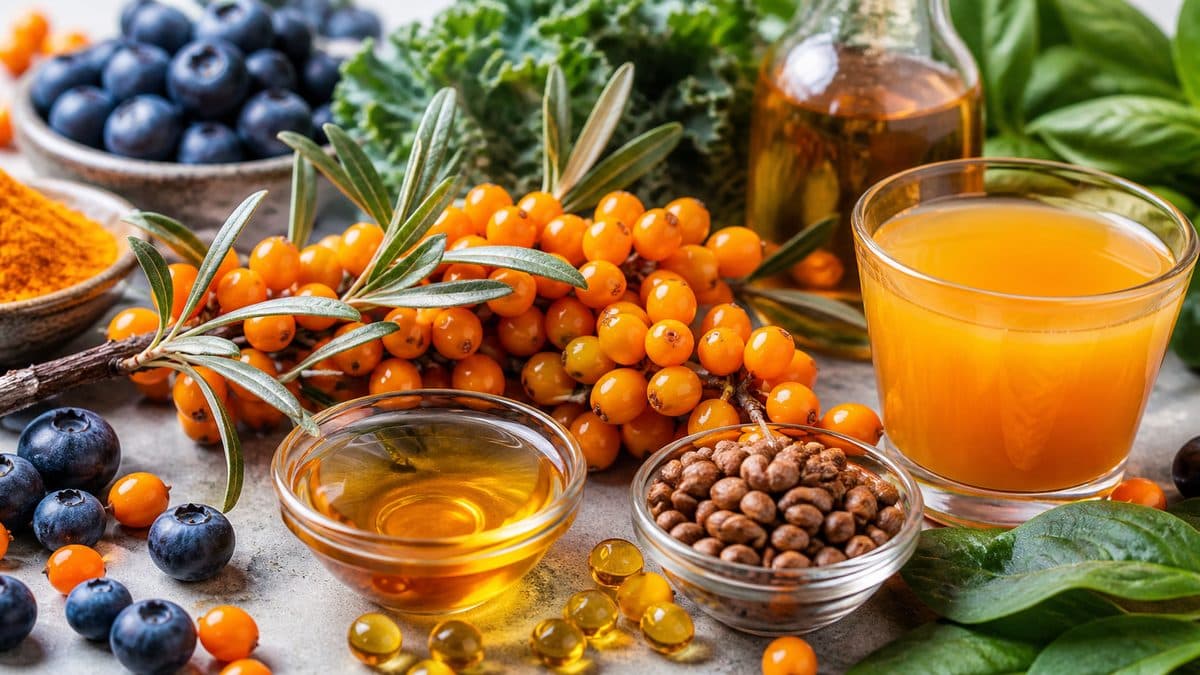
Carotenoids are the pigments behind the berry's deep orange colour, beta-carotene among them. They are the same family of compounds that colour carrots and pumpkin. In sea buckthorn they are part of what makes the juice look the way it does, and the colour is a reasonable visual cue that they are there.
Flavonoids
Flavonoids are a large family of plant compounds found across colourful fruits, teas and vegetables. They contribute to flavour and colour, and they are a routine part of any diet that includes a decent range of plant foods.
Superoxide dismutase
Superoxide dismutase is an antioxidant enzyme, and sea buckthorn fruit and leaves contain it. It is worth naming separately, because most of the antioxidant compounds in food are vitamins or plant pigments, while enzymes of this type are usually spoken about as something the body produces for itself. Finding one present in a fruit is a little unusual. In sea buckthorn it sits alongside the Vitamin C, Vitamin E, carotenoids and flavonoids described above, and adds to the breadth that makes the berry worth talking about.
Why variety beats any single compound
Different antioxidant compounds work in different environments. Some are water-soluble, some fat-soluble; some concentrate in one kind of tissue, some in another. No single compound covers the whole field, which is the strongest argument for eating a range of plant foods rather than hunting for one supreme ingredient. It is also why blends exist, and why a pairing such as sea buckthorn with turmeric puts two quite different plants in the same glass.
Sea buckthorn is useful here because it carries several at once, both water-soluble and fat-soluble, in a single fruit. That breadth is unusual. It is not a reason to eat only sea buckthorn, and any brand implying that one berry replaces a varied diet is not being straight with you.
Whole Sea Buckthorn fruit against isolated extracts
An isolated compound in a capsule is not the same thing as the compound in the fruit it came from. Whole fruit brings its compounds alongside fibre, acids, other vitamins and the fatty acids that come with an oil-bearing berry, all in the proportions the plant produced them. We have made that comparison directly in the case of juice against Vitamin C tablets, where the difference is easiest to see.
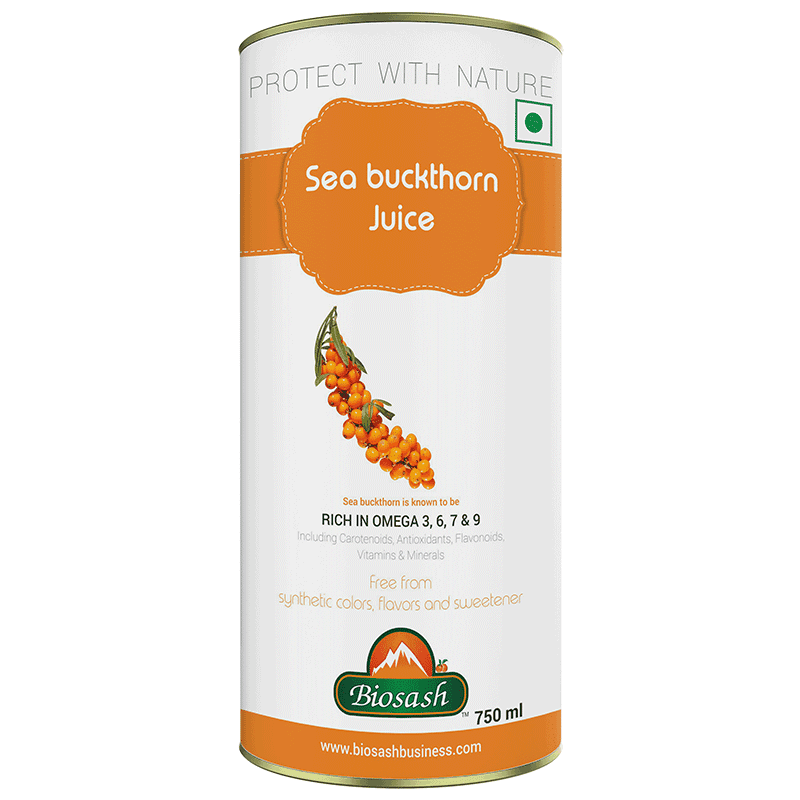
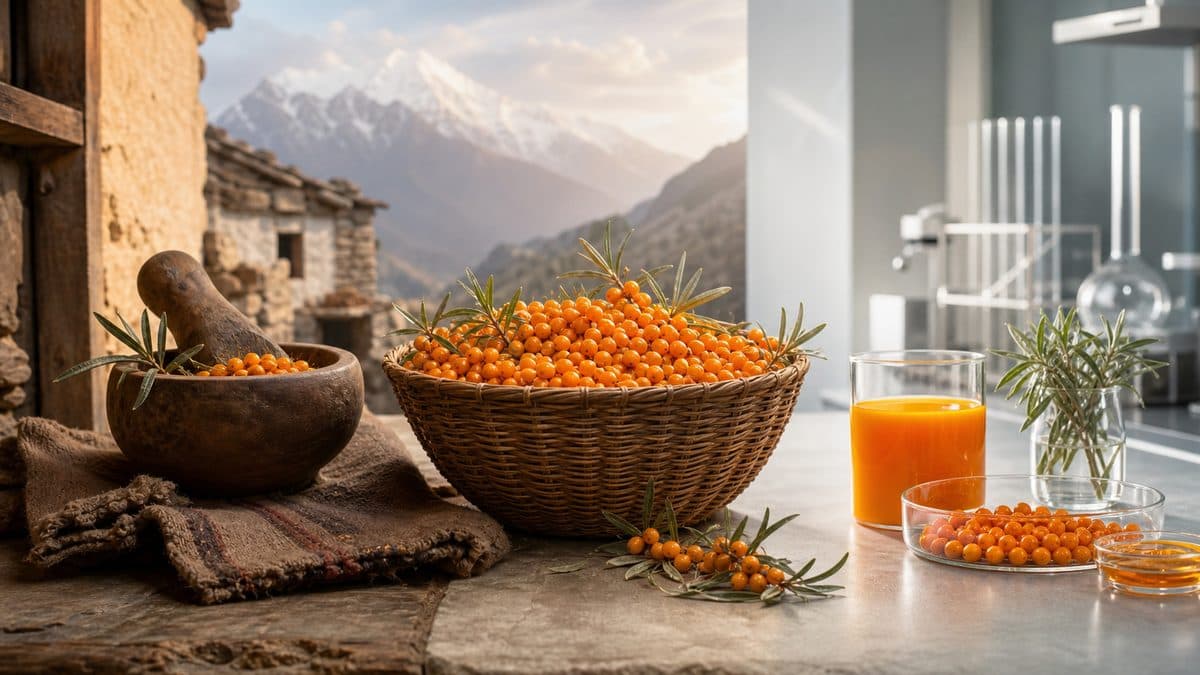
This is why a juice made from the fruit itself, with no added sugar and no artificial colours, flavours or sweeteners, is a more honest way to include these compounds than a heavily processed alternative. Biosash sources Himalayan sea buckthorn, manufactures under WHO-GMP certified conditions and has batches tested at a NABL-accredited laboratory, which is the part of the story that actually determines what reaches the glass.
What antioxidants are not
Some plain speaking is due here, because this word attracts more marketing nonsense than almost any other in nutrition. Antioxidants in food are not a treatment for anything. They do not stop time, they do not undo years of anything, and no fruit reverses ageing, whatever the packaging in the aisle suggests. The longer version of that argument sits in our piece on sea buckthorn and anti-ageing.
What they are is a normal, worthwhile part of eating well. Colourful plant foods, eaten regularly, supply them. That is the reasonable claim, and it is the one worth building a routine on. Our anti ageing range is intended in that spirit: nutritional support for skin and everyday wellbeing, not a promise about the calendar.
Getting them into an ordinary day
Practically speaking, the aim is range and repetition rather than any single dramatic addition:
- Eat across colours. Orange, red, green and purple plant foods carry different compound families.
- Include some fat with vegetables, since fat-soluble compounds like Vitamin E and carotenoids travel that way. A little oil in your sabzi is doing a job.
- Do not overcook everything. Vitamin C in particular does not enjoy long heat.
- Keep a small habit going daily rather than an ambitious one occasionally. Around 10 ml of juice diluted in water, morning and evening, is the pattern most people find sustainable, and you will find it across our nutritional juices.
If you are pregnant, nursing or taking regular medication, run any new supplement past your doctor first.
Antioxidants are ordinary, useful compounds in ordinary, useful foods. Sea buckthorn happens to carry an unusually broad set of them in one small orange berry, which is a good reason to include it and never a reason to stop eating everything else.