Energy Drinks
How to Spot Fake or Diluted Sea Buckthorn Juice Before You Buy
10 Sept 2026 • Amisha Surana
The quickest way to judge a sea buckthorn juice is to ignore the front of the bottle and read the ingredient list on the back. Ingredients are listed in descending order of quantity, so whatever comes first is most of what you are buying. If water and sugar sit ahead of sea buckthorn, you already have your answer.
Sea buckthorn is a genuinely difficult crop. It grows in cold, high-altitude regions, in India mainly Ladakh, Himachal Pradesh and Spiti, the harvest window is short, and the thorny shrubs make picking slow. Anything sold very cheaply in a very large bottle deserves a careful look at the label before it goes into your cart.
Read the ingredient list in order
The ingredient panel tells you almost everything, provided you read it as a ranking rather than as a list.
- What comes first. If water leads and sea buckthorn appears late, the juice is heavily diluted.
- Added sugar under other names. Sugar, liquid glucose, fructose syrup, invert syrup, honey and fruit concentrate all add sweetness. Sea buckthorn is naturally low in sugar, so a very sweet version has usually been helped along.
- Other juices filling the gap. Apple and grape concentrate are common bulking agents. They are not harmful, but you are paying sea buckthorn prices for apple juice.
- Colours and flavours. A real sea buckthorn juice does not need added colour. It is already an intense orange from its own carotenoids.
- Preservatives and stabilisers. Worth noting, at least, and worth comparing across bottles.
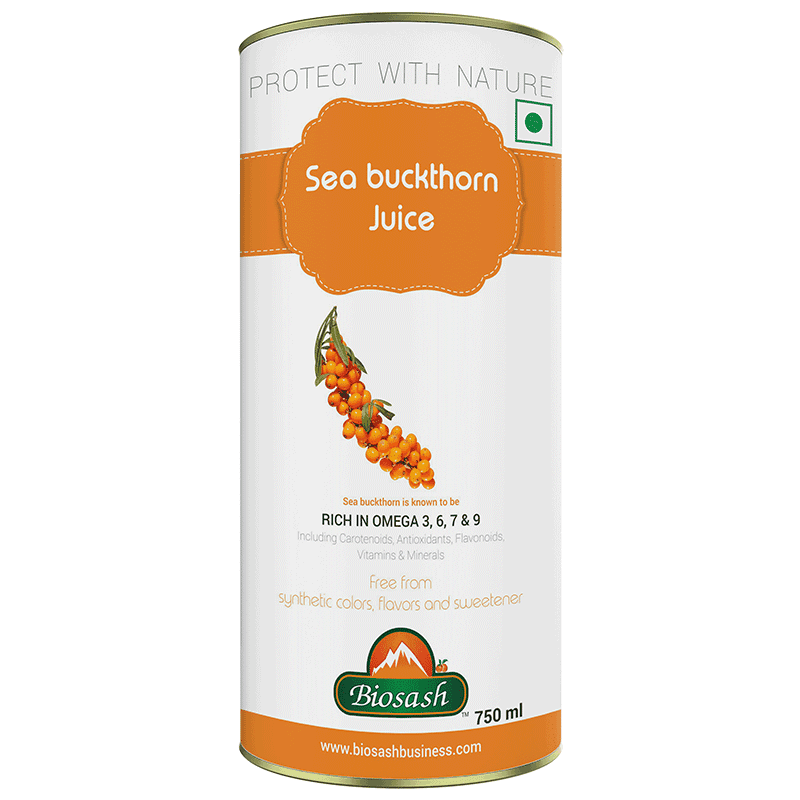
For reference, Biosash juices contain no added sugar and no artificial colours, flavours or sweeteners, which is the standard worth holding any bottle to.
The front label and the back label rarely agree
Front-of-pack language is marketing, and it is written to be legally defensible rather than informative. Learn the difference between a few common phrasings.
Juice versus beverage
A product described as a sea buckthorn beverage, drink or nectar is usually a diluted, often sweetened preparation. A juice is a juice. The word chosen on the pack is deliberate, and it is one of the more reliable signals available to you.
Flavour versus fruit
Sea buckthorn flavoured is not the same as sea buckthorn. The first tells you the fruit may be barely present. Read the ingredient panel to confirm which one you have.
Natural, pure and premium
These words carry no fixed definition and can sit on almost any bottle. They are not evidence of anything. Treat the ingredient list, the manufacturing details and the testing marks as the real information.
What genuine sea buckthorn juice looks, smells and tastes like
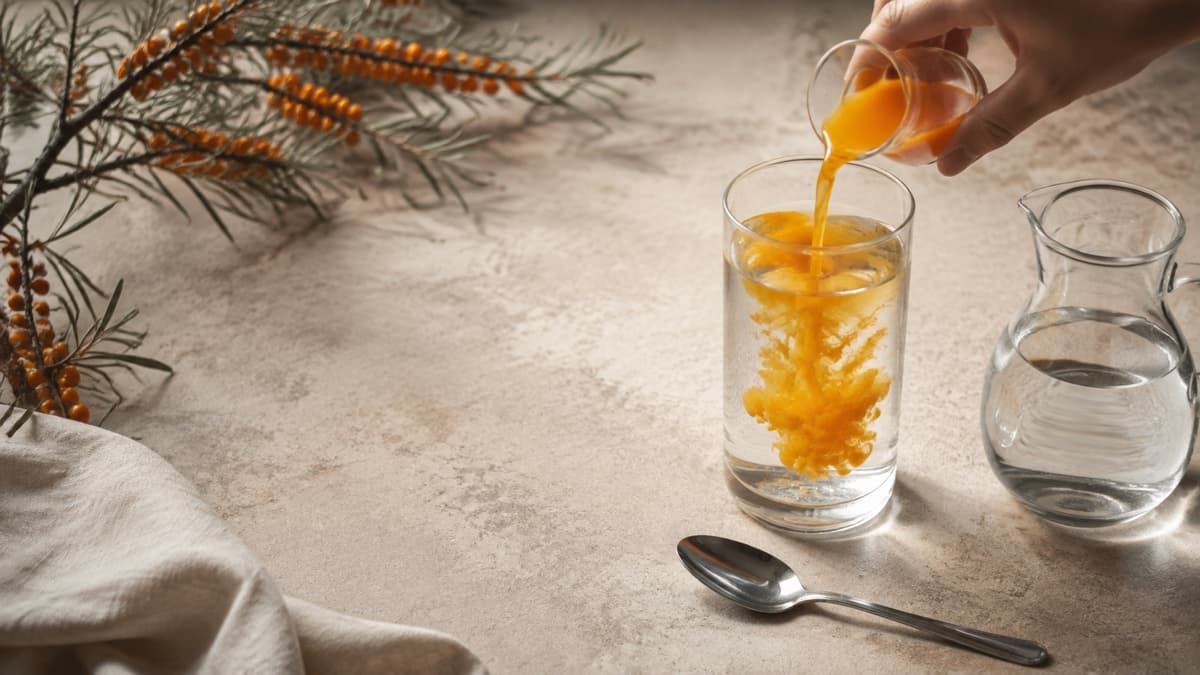
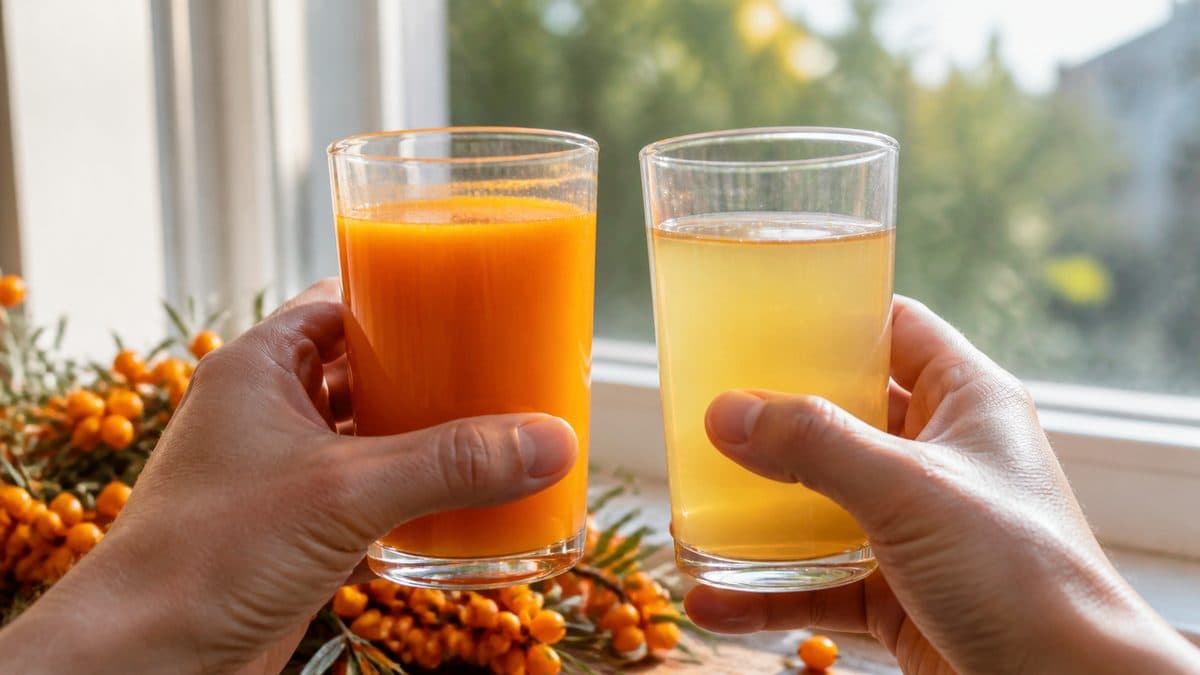
Once the bottle is open, the juice itself tells you a fair amount. Real sea buckthorn juice is a deep, slightly cloudy orange and it is not transparent. Natural pulp settles at the bottom, so a layer that separates when the bottle stands is expected and is a good sign rather than a defect. Shake before pouring.
The taste is the strongest test. It should be distinctly tangy and quite acidic, sharp, faintly resinous, and not sweet. That sourness is characteristic of the fruit. If it tastes like a pleasant orange squash, something has been diluted or sweetened. A juice that is thin, watery, uniformly clear and easy to drink neat is usually not what it claims to be.
Set the two side by side and the pattern is easy to hold in your head.
| What you are checking | Genuine sea buckthorn juice | Diluted or flavoured version |
|---|---|---|
| Colour | Deep, slightly cloudy orange | Pale, thin and transparent |
| Settling | Pulp settles, so it needs a shake | Stays uniform, with nothing to shake |
| Aroma | Sharp and faintly resinous | Sweet, closer to a soft drink |
| Taste | Distinctly tangy and acidic | Smooth and easy to drink neat |
| Ingredient order | Sea buckthorn at the top of the list | Water, sweetener or another juice first |
| Product name | Sold as a juice | Sold as a beverage, drink or nectar |
| Pack details | Batch number, dates and a full manufacturer address | Brand name and a vague address |
Manufacturing and testing details on the pack
Serious manufacturers print information that casual ones do not bother with. Turn the bottle around and look for the practical details.
- A batch or lot number, plus manufacturing and expiry or best-before dates
- An FSSAI licence number and a full manufacturer name and address, not just a marketing office
- Manufacturing standards stated openly; Biosash manufactures under WHO-GMP certified manufacturing
- Testing practice stated openly; Biosash batch tests at a NABL-accredited laboratory
- Clear storage instructions, since a juice with no preservatives needs refrigeration after opening
A label with no batch number, a vague address and no mention of any testing is telling you how much care went into the product, even if it says nothing directly.
How specific are the sea buckthorn sourcing claims
Vague origin claims are easy to write. Specific ones are harder to fake and easier to check. A brand that names the region it sources from, describes how the berries are harvested and processed, and can explain how the fruit travels from a high-altitude harvest to a bottle is giving you something to verify. Phrases like wild-harvested belong in this part of the label too, and what that term does and does not promise is worth knowing before it sways a purchase.
Ask a simple question of any bottle: does this brand tell me where the fruit came from, or only how good it is for me? Companies that put real effort into sourcing tend to talk about it, because it is the expensive part. You will find that level of detail across our nutritional juices range for exactly that reason.
Price, packaging and where you buy
Price is an imperfect signal but not a useless one. A genuine, minimally diluted sea buckthorn juice cannot be produced very cheaply, because the raw material is hard to grow, harvest and transport. A bottle priced far below everything else on the shelf is usually mostly water, and what sits behind a sensible price, from the harvest down to the bottling line, is a longer story in itself.
Check the physical bottle too. The seal should be intact, the cap should not turn freely before opening, and the label should be printed cleanly rather than pasted crookedly. Buying from the brand's own store or an authorised seller removes most of the risk of counterfeit or badly stored stock, particularly on marketplaces where the same listing can be fulfilled by several different sellers.
A short checklist for the shop
Before you pay, run through five things: sea buckthorn near the top of the ingredient list, no added sugar or colour, a printed batch number and manufacturer address, some stated manufacturing and testing standard, and a price that makes sense for a Himalayan crop. If four of the five hold up, you are probably fine. The same five checks travel to the rest of the shelf, including when you are weighing this berry against aloe vera juice.
Being a careful reader of labels is the most useful habit in this category, and it carries across everything in our nourishing range. Spend two minutes on the back of the bottle and you will rarely be disappointed by what is inside it.